Category: PEACE WITH OTHERS
Socio-Political Transformation

Malipayon Peace Hub is a shared vision of Dann Pantoja (Datu Pugawang) and Joji Pantoja (Bai Kasunayan) for a more just, people-centered, and regenerative future. Rooted in decades of peacebuilding, social entrepreneurship, Indigenous engagement, and community development, the Hub seeks to demonstrate that genuine prosperity is possible when human flourishing and ecological regeneration become inseparable. Inspired by transformative experiences across the Global South, Malipayon brings together peace, justice, Indigenous wisdom, ethical enterprise, regenerative agriculture, environmental stewardship, and intergenerational mentoring. It is envisioned not simply as a physical place, but as a living laboratory where communities can learn, experiment, create livelihoods, restore ecosystems, and nurture relationships grounded in dignity and mutual care. For Dann and Joji, Malipayon represents a continuing journey of hope: creating practical pathways where people, communities, and the land can flourish together—joyfully, sustainably, and peacefully.
Continue reading
Permanent link to this article: https://waves.ca/2026/06/22/malipayon-peace-hub-creating-a-justice-based-people-oriented-and-land-regenerating-system-of-holistic-prosperity/
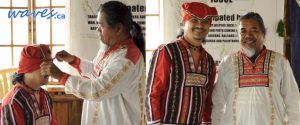
For many years in peacebuilding work among Indigenous Peoples in Mindanao and across Asia, I have become increasingly convinced that authentic leadership is not primarily about authority, position, charisma, or institutional power. Leadership is fundamentally about nurturing life, sustaining relationships, and guiding communities toward justice, dignity, and peace. My understanding of leadership is best represented by a pyramid. Unlike conventional leadership models that emphasize control from the top, this framework emphasizes foundations, relationships, service, and stewardship. It is especially relevant in Indigenous communities where leadership is often understood as relational, communal, and accountable to both present and future generations.
Continue reading
Permanent link to this article: https://waves.ca/2026/06/05/the-leadership-pyramid-peacebuilding-leadership-lessons-im-learning-from-indigenous-peoples/
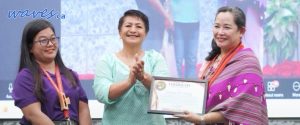
It was both an honor and a privilege to serve as one of the plenary speakers during the First Lumin-awa International Multidisciplinary Research Conference (LIMRC) 2026, held on 25–27 May 2026 at the Teatro Kalinga of Kalinga State University in Bulanao, Tabuk City. The conference brought together researchers, educators, practitioners, government leaders, and development partners from across the Philippines and abroad under the theme, “Innovating Justice and Governance: Multidisciplinary Pathways to Equity, Inclusion, and Sustainable Development.” The event was jointly organized by Kalinga State University and the state universities of the Cordillera Administrative Region through a landmark academic partnership that seeks to strengthen research collaboration and social innovation.
Continue reading
Permanent link to this article: https://waves.ca/2026/05/29/i-represented-cfp-at-the-first-lumin-awa-international-multidisciplinary-research-conference-2026/

At 70, I no longer see my life primarily through the language of aging, retirement, or diminished productivity. I experience this season instead as a deepening emergence into my own humanity—a quieter, freer becoming that decades of schedules, institutional demands, leadership burdens, and economic necessity had often obscured. In a culture obsessed with speed, youthfulness, innovation, and measurable output, growing old is frequently treated as decline. Yet many ancient societies understood elderhood not as irrelevance but as ripened presence. Elders were valued because they carried memory, discernment, emotional depth, and wisdom shaped by suffering, failure, love, endurance, and long reflection. I hesitate to call myself wise, because life still dismantles my certainties with remarkable consistency. Yet I do recognize within myself a gentle simplification. The noise of performance is fading. The need to impress is loosening. Ego occupies less space. What remains feels closer to essence.
Continue reading
Permanent link to this article: https://waves.ca/2026/05/12/after-a-salaried-job-discovering-new-aspects-of-my-becoming-at-70/

The Toboso encounter in Negros Occidental, where Alyssa Alano (“Ka Kikay”), two children, and others reportedly died during a military operation, grieves me not only as a citizen but as a person of faith. I do not see this merely as another security incident, nor simply as another chapter in the ideological war between the state and the revolutionary movement. I see it as a moral wound upon the nation. Whenever young lives are extinguished in the mountains, fields, or villages of our land, something sacred is violated. Human beings are not expendable instruments of state policy, nor are they disposable fuel for revolution. Every life bears inherent dignity. Every death in this long conflict should trouble the conscience of the Republic.
Continue reading
Permanent link to this article: https://waves.ca/2026/04/29/toboso-alyssa-alano-and-the-unfinished-peace-a-peacebuilding-pastors-reflection-on-justice-human-dignity-and-national-reconciliation/

The unipolar moment that followed the Cold War — anchored by Western-led political, financial, and security institutions — is rapidly receding. In its place, a multipolar global system is emerging, where multiple regional powers assert their voices, values, and visions. This is not just a geopolitical rearrangement; it is a civilizational dialogue about sovereignty, dignity, and equitable cooperation. At Datu Pugawang Corporation (DPC), we interpret this transformation as both an opportunity and a challenge. Rooted in the pre-colonial ethos of kapwa (shared humanity) and bayanihan (mutual cooperation), we aim to engage with this evolving order in ways that promote peace, justice, and mutual respect. Our corporate strategy is built around the conviction that business must be a bridge between cultures and an instrument of human dignity.
Continue reading
Permanent link to this article: https://waves.ca/2026/04/06/welcoming-the-multipolar-world-our-corporate-approach-to-the-emergence-of-brics/

On March 26, 2026, during the celebration of National Volunteer Day, I stood in deep gratitude as the Department of Agriculture, through the Philippine Council for Agriculture and Fisheries, conferred upon our work the Regional Level Most Promising Sectoral Committee Award. I received this recognition not as a personal achievement, but as a reflection of a shared journey—a journey shaped by community, sustained by relationships, and guided by a collective vision for a more inclusive and peaceful agricultural sector. This moment affirmed that when diverse stakeholders come together with trust and shared purpose, meaningful transformation becomes possible. It also reminded me that the seeds we plant through volunteerism—though often unseen—grow into lasting impact in the lives of farmers and communities. Above all, it strengthened my resolve to continue serving with humility, knowing that every step forward is carried by the strength of many, not just one.
Continue reading
Permanent link to this article: https://waves.ca/2026/03/31/brewing-peace-together-a-journey-of-shared-leadership-volunteerism-and-hope-in-davaos-coffee-communities/


