Category: PEACE WITH ONE’S BEING
Psycho-social transformation
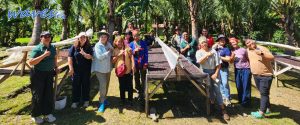
Coffee for Peace (CFP) and Malipayon Peace Hub (MPH), located in Purok Malipayon, Barangay Managa, Bansalan, Davao del Sur, serve as a community-based Learning Site supporting the Department of Agrarian Reform’s Value Chain Innovation for Sustainable Transformation in Agrarian Reform Communities (DAR-VISTA) Project. The Learning Site integrates coffee value-chain development, inclusive livelihoods, Indigenous community development, environmental stewardship, and peacebuilding through experiential learning and practical demonstrations. It provides farmers, agrarian reform beneficiaries, community enterprises, and development practitioners opportunities to explore sustainable coffee production, post-harvest processing, value addition, enterprise development, and market engagement. Situated within the ancestral domain of the Bagobo Tagabawa people, the Learning Site emphasizes respect for Indigenous knowledge, cultural identity, community participation, and responsible land stewardship. In partnership with PeaceBuilders Community, Inc. (PBCI), it connects agricultural innovation with trust-building, constructive conflict transformation, and inclusive economic opportunities, advancing resilient agrarian communities and sustainable rural development through coffee enterprise and collaborative learning.
Continue reading
Permanent link to this article: https://waves.ca/2026/10/08/coffee-for-peace-at-malipayon-peace-hub-a-learning-site-of-the-dar-vista-project/
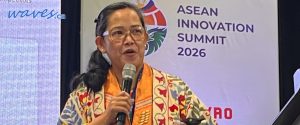
The 28th Davao Agri Trade Expo 2026 demonstrated the continuing evolution of Mindanao agriculture — from an emphasis primarily on production toward a more integrated vision involving innovation, enterprise, investment, market access, technology, regional trade, and inclusive growth. Held at SMX Convention Center, SM Lanang, from 17–19 September, the expo provided a significant meeting place for agricultural and business stakeholders from Mindanao and beyond. The event was organized by the Davao City Chamber of Commerce and Industry, Inc. (DCCCII) and was held alongside the inaugural ASEAN Innovation Summit 2026. Within this larger gathering, Joji Pantoja of Coffee for Peace brought an important human and social dimension to the conversation through her roles as plenary speaker and panelist. Her participation connected agricultural development with the realities of farmers, Indigenous communities, social entrepreneurship, peacebuilding, and responsible stewardship of creation.
Continue reading
Permanent link to this article: https://waves.ca/2026/09/20/agriculture-and-trade-as-pathways-toward-dignity-inclusive-prosperity-and-peace-our-take-on-the-28th-davao-agri-trade-expo-2026/
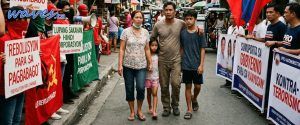
I have been reflecting on an important question in Philippine political life: What does it mean to pursue social transformation when the old ideological categories no longer adequately describe our reality? For me, the answer cannot be found simply by declaring the Philippine Left irrelevant, nor by defending everything historically associated with the revolutionary Left. Both positions are too simplistic. The deeper challenge is to distinguish between the validity of social grievances and the validity of the political strategies used to address them. The Philippines continues to experience poverty, land inequality, precarious employment, political dynasties, corruption, oligarchic concentration of wealth and power, environmental destruction, Indigenous Peoples’ struggles, and profound inequalities between urban and rural communities. These realities did not disappear simply because particular revolutionary organizations have weakened. A movement may fail in its strategy while the social conditions that produced it remain unresolved. This is why I believe we need to move beyond the question, “Is the Philippine Left still relevant?” The more important question is: “What kind of social transformation does the Philippines need today?”
Continue reading
Permanent link to this article: https://waves.ca/2026/09/10/beyond-the-left-right-binary-toward-a-philippine-politics-of-sovereignty-and-social-transformation/
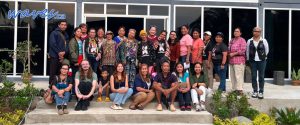
The “Hawak ng Babae ang Kalahati ng Mundo” session provided a meaningful space for women and men from Indigenous Peoples (IP) and non-IP communities to reflect on gender roles, leadership, livelihoods, identity, and community life. Through participatory activities, participants examined the realities of their daily responsibilities and recognized the often-unseen labor and leadership of women in households, farming, coffee production, entrepreneurship, and community governance. The 5Rs Framework encouraged reflection on recognizing, reducing, redistributing, representing, and building resilience around shared responsibilities. Discussions on the Three Layers of Life and the Four Harmonies deepened participants’ understanding of purpose, well-being, relationships, spirituality, and stewardship of creation. The session also created opportunities for dialogue between IP and migrant communities, particularly on ancestral domain rights, coffee farming, economic cooperation, and peaceful coexistence. Ultimately, the gathering affirmed women’s vital contributions while promoting inclusive, respectful, resilient, and harmonious communities.
Continue reading
Permanent link to this article: https://waves.ca/2026/08/31/women-hold-half-the-world-leadership-livelihoods-and-community-transformation/
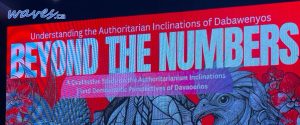
On August 20, 2026, over 150 community leaders, educators, and advocates filled the Bapa Benny Tudtud Auditorium for the First Davao Democracy Forum, convened by Ateneo de Davao University and the Philippine Observatory on Democracy. Far from a quiet academic exercise, the forum confronted a living paradox: Dabawenyos’ fierce commitment to democratic ideals alongside enduring support for strong, centralized authority. As a reactor for the panel “Reactions from the Frontlines of Democracy,” I was tasked with testing empirical research against community realities. Scholars Atty. Romeo Cabarde Jr., Dr. Rosalinda Tomas, and Dr. Christine Diaz mapped our political DNA — authoritarian inclinations, social media’s shaping of democratic imagination, and pathways for civic education — revealing what researchers term authority-based democracy: not an absence of democratic values, but a complex, ambivalent consciousness rooted in performance-based legitimacy, historical memory, and conditional trust. This reflection challenges us to democratize effectiveness itself, turning disciplined governance into participatory, accountable systems.
Continue reading
Permanent link to this article: https://waves.ca/2026/08/21/beyond-the-numbers-standing-at-the-frontlines-of-davaos-democratic-reflection/

There are journeys that take us to places, and there are journeys that bring us home to relationships. For me, Bai Madigar’s return to the Bagobo Tagabawa community was the latter. Her presence reminded me that kinship is not confined by blood, age, geography, or even generations. It grows through relationships of trust, respect, hospitality, shared memory, and mutual care. As a member of the Malik Clan of the Bagobo Tagabawa community, I have come to understand that belonging carries both joy and responsibility. What one generation begins, another generation can inherit, deepen, and carry forward. Seeing Bai Madigar, together with Byron and his family, reconnect with our Indigenous relatives touched me deeply. It was more than a family gathering; it was a living expression of intergenerational solidarity. For me, this is the beauty of peacebuilding: relationships becoming bridges, memory becoming heritage, and kinship becoming a pathway toward a more just and harmonious future.
Continue reading
Permanent link to this article: https://waves.ca/2026/07/24/when-kinship-crosses-generations-bai-madigar-returns-to-the-bagobo-tagabawa-community/
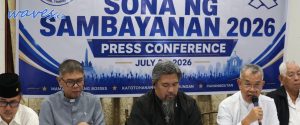
The SONA ng Sambayanan 2026 is more than a protest statement; it is a prophetic indictment of a political and economic system that continues to produce poverty, corruption, inequality, and ecological destruction. While I affirm its call for accountability, social justice, and the rejection of political dynasties, I also read it through the analytical lens of a more radical transformation, expressed within the ethical commitments of nonviolent Liberation Theology. For me, corruption is not merely the failure of individual politicians but a symptom of deeper structural realities—oligarchic capitalism, landlordism, neocolonial dependence, and the concentration of wealth and power. My commitment remains rooted in the liberating way of Jesus Christ, who confronted oppressive systems through courageous, truth-filled, and active nonviolence. Genuine transformation will not come simply by replacing political personalities but by dismantling unjust structures and building participatory institutions where justice, peace, human dignity, and the common good can flourish.
Continue reading
Permanent link to this article: https://waves.ca/2026/07/24/beyond-corruption-a-nonviolent-liberation-theology-reading-of-the-sona-ng-sambayanan-2026/


