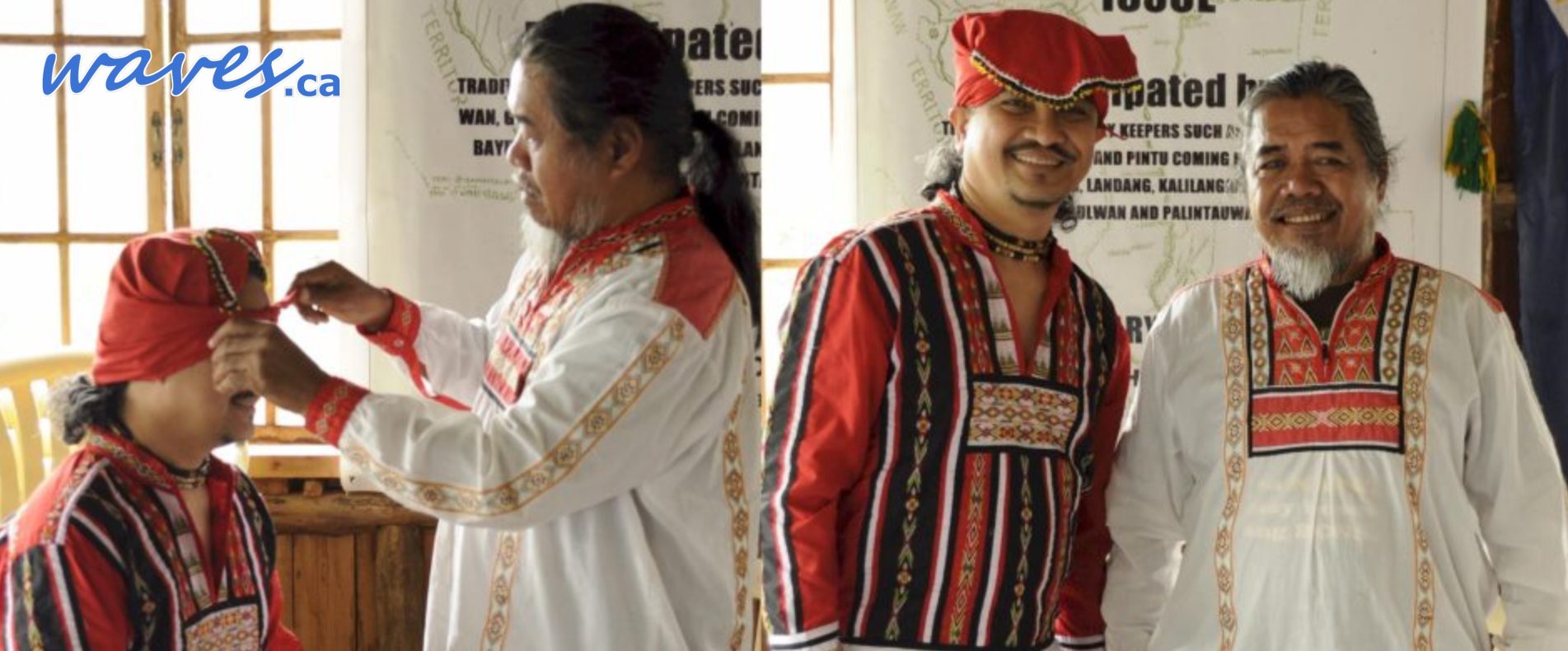
For many years in peacebuilding work among Indigenous Peoples in Mindanao and across Asia, I have become increasingly convinced that authentic leadership is not primarily about authority, position, charisma, or institutional power. Leadership is fundamentally about nurturing life, sustaining relationships, and guiding communities toward justice, dignity, and peace. My understanding of leadership is best represented by a pyramid. Unlike conventional leadership models that emphasize control from the top, this framework emphasizes foundations, relationships, service, and stewardship. It is especially relevant in Indigenous communities where leadership is often understood as relational, communal, and accountable to both present and future generations.
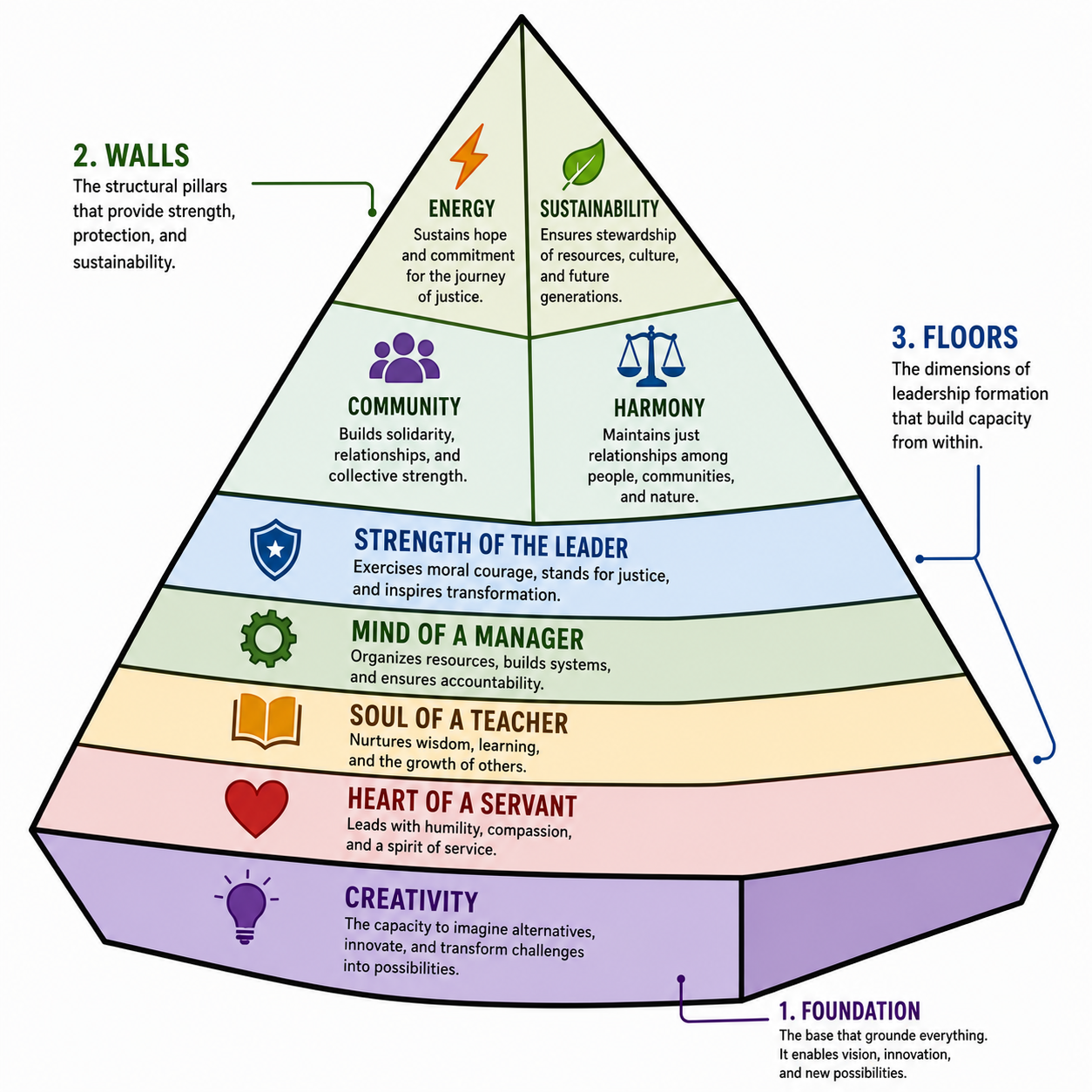
The Foundation: Creativity
At the base of the pyramid is Creativity.
Creativity is the capacity to imagine alternatives to oppression, conflict, and exclusion. Without creativity, leadership merely reproduces existing systems of domination.
Justice-based peacebuilding requires imagination. Communities affected by historical injustices must envision futures beyond violence, dispossession, and marginalization. Indigenous communities throughout Asia have repeatedly demonstrated this capacity.
For example, the Indigenous peoples of the Cordillera region in the Philippines creatively resisted the proposed Chico River Dam Project during the 1970s and 1980s. Rather than relying solely on political protest, they mobilized cultural traditions, community rituals, oral histories, and collective decision-making processes to defend ancestral lands. Their resistance became one of the most successful Indigenous rights movements in Southeast Asia and contributed significantly to the recognition of ancestral domain rights in the Philippines (Cariño, 1987).
Similarly, the Orang Asli communities in Malaysia have developed innovative strategies that combine traditional ecological knowledge with legal advocacy to protect customary lands against commercial encroachment (Nicholas, 2000).
Creativity enables communities to transform suffering into resilience and resistance into constructive social change.
The Walls: Four Structural Pillars
A foundation alone cannot sustain a leadership structure. Four walls provide strength and protection.
Eastern Wall: Energy
Leadership requires energy.
This is not merely physical stamina but the capacity to sustain hope and commitment during long struggles for justice.
Many Indigenous movements in Asia have faced generations of discrimination, displacement, and cultural assimilation. Yet communities continue organizing because they draw energy from collective memory, cultural identity, and spiritual traditions.
The struggle of the Ainu people in Japan illustrates this reality. Despite centuries of assimilation policies, the Ainu maintained cultural traditions and eventually secured formal recognition as an Indigenous people in 2008 and further legal recognition in 2019 (Siddle, 2020).
Leadership energy emerges when people remain connected to purpose and identity.
Western Wall: Community
Leadership is never an individual achievement.
Indigenous worldviews across Asia generally emphasize interdependence rather than individualism. The Filipino concept of kapwa, the Indonesian principle of gotong royong, and many Indigenous notions of kinship all emphasize collective well-being.
The Karen communities of Myanmar and Thailand have historically relied upon communal decision-making systems that prioritize consensus-building over domination. Such practices often serve as mechanisms for conflict prevention and social cohesion (Buergin, 2003).
Justice-based peacebuilding recognizes that sustainable peace emerges from healthy relationships and strong communities rather than heroic individuals.
Southern Wall: Sustainability
Leadership must think beyond immediate success.
Many contemporary development models prioritize short-term economic gains while neglecting ecological integrity and cultural survival. Indigenous Peoples often challenge this paradigm through long-term stewardship practices.
The Ifugao Rice Terraces of the Philippines provide a powerful example. For more than two millennia, Indigenous communities have sustained agricultural systems that integrate environmental conservation, water management, spirituality, and social organization (Conklin, 1980).
Such systems demonstrate that sustainability is not merely environmental; it is cultural, social, economic, and spiritual.
Justice-based peacebuilding requires leadership that protects the rights and well-being of future generations.
Northern Wall: Harmony
Harmony does not mean the absence of conflict.
Rather, harmony involves maintaining just relationships among people, communities, and the natural world.
Many Indigenous cosmologies reject the modern separation between humanity and nature. Human flourishing is understood as inseparable from ecological well-being.
The Dayak peoples of Borneo traditionally practiced systems of forest governance that balanced human needs with ecological preservation. Their customary laws often provided mechanisms for managing disputes and maintaining social equilibrium (Dove, 2011).
Peacebuilding rooted in harmony seeks reconciliation without sacrificing justice.
The Floors: Four Stages of Leadership Formation
Upon these walls rest four floors representing progressively deeper dimensions of leadership.
First Floor: The Heart of a Servant
Authentic leadership begins with service.
Servant leadership stands in contrast to domination-oriented leadership models. The leader exists for the community, not the community for the leader.
Many Indigenous elders throughout Asia embody this principle. Authority is often earned through demonstrated commitment to communal well-being rather than personal ambition.
Among numerous Indigenous communities in the Philippines, respected elders derive legitimacy from wisdom, integrity, and service rather than coercive power (Molintas, 2004).
The servant’s heart asks:
“How can I contribute to the flourishing of others?”
Second Floor: The Soul of a Teacher
Leadership involves cultivating collective wisdom.
Teachers do more than transfer information. They nurture critical consciousness, cultural memory, and moral imagination.
Indigenous elders often serve as educators who transmit oral traditions, ecological knowledge, ethical values, and conflict-resolution practices.
In Taiwan, Indigenous revitalization movements have emphasized intergenerational learning as a means of preserving language and cultural identity in the face of historical assimilation policies (Simon, 2010).
Peacebuilders must become teachers who help communities understand both historical injustices and pathways toward transformation.
Third Floor: The Mind of a Manager
Vision alone is insufficient.
Communities also need organization, coordination, and accountability.
Managers translate ideals into systems and practices. They ensure that resources are stewarded responsibly and that plans become reality.
Indigenous organizations throughout Asia increasingly combine traditional governance systems with contemporary management practices to advance land rights, environmental protection, and community development.
Effective management transforms aspirations into measurable progress.
Fourth Floor: The Strength of a Leader
At the highest floor stands leadership strength.
This is not the strength of domination but the strength of moral courage.
Justice-based peacebuilding requires leaders willing to confront systems of oppression while remaining committed to nonviolence and human dignity.
The life of Macli-ing Dulag illustrates such strength. As a Kalinga leader opposing the Chico River Dam Project, he courageously defended ancestral lands despite immense political pressure. His assassination in 1980 became a catalyst for broader Indigenous rights movements in the Philippines (Cariño, 1987).
Leadership strength emerges when service, wisdom, organization, and courage converge.
Implications to Justice-Based Peacebuilding
This Leadership Pyramid offers a framework for transformative leadership among Indigenous Peoples and their allies.
Justice-based peacebuilding recognizes that peace is not merely the absence of armed conflict. Peace requires addressing historical injustices, restoring dignity, protecting ancestral lands, and strengthening community resilience.
The pyramid reminds us that:
:: Creativity imagines alternatives.
:: Energy sustains the struggle.
:: Community builds solidarity.
:: Sustainability protects future generations.
:: Harmony nurtures right relationships.
:: Servanthood grounds leadership in humility.
:: Teaching cultivates wisdom.
:: Management provides stewardship.
:: Leadership exercises moral courage.
When these elements are integrated, leadership becomes a force for healing historical wounds and building just, peaceful, and sustainable communities.
The ultimate purpose of leadership is not to elevate leaders. It is to empower communities to flourish in dignity, justice, and peace.
⸻
References
Buergin, R. (2003). Trapped in environmental discourses and politics of exclusion: Karen in the Thung Yai Naresuan Wildlife Sanctuary in Thailand. Modern Asian Studies, 37(2), 375–404.
Cariño, J. K. (1987). The Chico River Basin Development Project: A case study in national development policy. Baguio City: Cordillera Studies Center.
Conklin, H. C. (1980). Ethnographic atlas of Ifugao: A study of environment, culture, and society in Northern Luzon. Yale University Press.
Dove, M. R. (2011). The Banana Tree at the Gate: A history of marginal peoples and global markets in Borneo. Yale University Press.
Molintas, J. M. (2004). The Philippine Indigenous Peoples’ struggle for land and life: Challenging legal texts. Arizona Journal of International and Comparative Law, 21(1), 269–306.
Nicholas, C. (2000). The Orang Asli and the contest for resources: Indigenous politics, development, and identity in Peninsular Malaysia. International Work Group for Indigenous Affairs.
Siddle, R. (2020). Race, resistance and the Ainu of Japan (2nd ed.). Routledge.
Simon, S. C. (2010). The emergence and transformations of Indigenous identity in Taiwan. In M. Weiner & K. Siddle (Eds.), Indigenous minorities and modern nation states in Asia (pp. 35–58). Routledge.


